Trillium Lake Trail: Summer Loop vs. Winter Snow Route
The summer lake loop and the winter snow route reach the same destination, but they use different starting points, distances, parking rules, surfaces and navigation skills.
Access information checked August 24, 2026. Conditions may have changed.
SEASONAL ACCESS — Vehicle gates close annually December 1–April 1, with weather-driven changes possible. Check gate, fire, snow and trail status before departure.
Summer and winter are two different trips
|
Field |
Current planning note |
|---|---|
|
Summer loop |
Approximately 2 miles |
|
Summer design |
Barrier-free design with boardwalk and compacted rock |
|
Winter loop |
About 3.6 miles around lake; roughly 4.4 miles round trip from Sno-Park |
|
Gate closure |
Annually December 1–April 1, subject to weather adjustments |
|
Winter permit |
Oregon Sno-Park permit, November 1–April 30 |
|
Winter grooming |
$3 donation recommended; no formal trail fee |
Summer: start near the lake
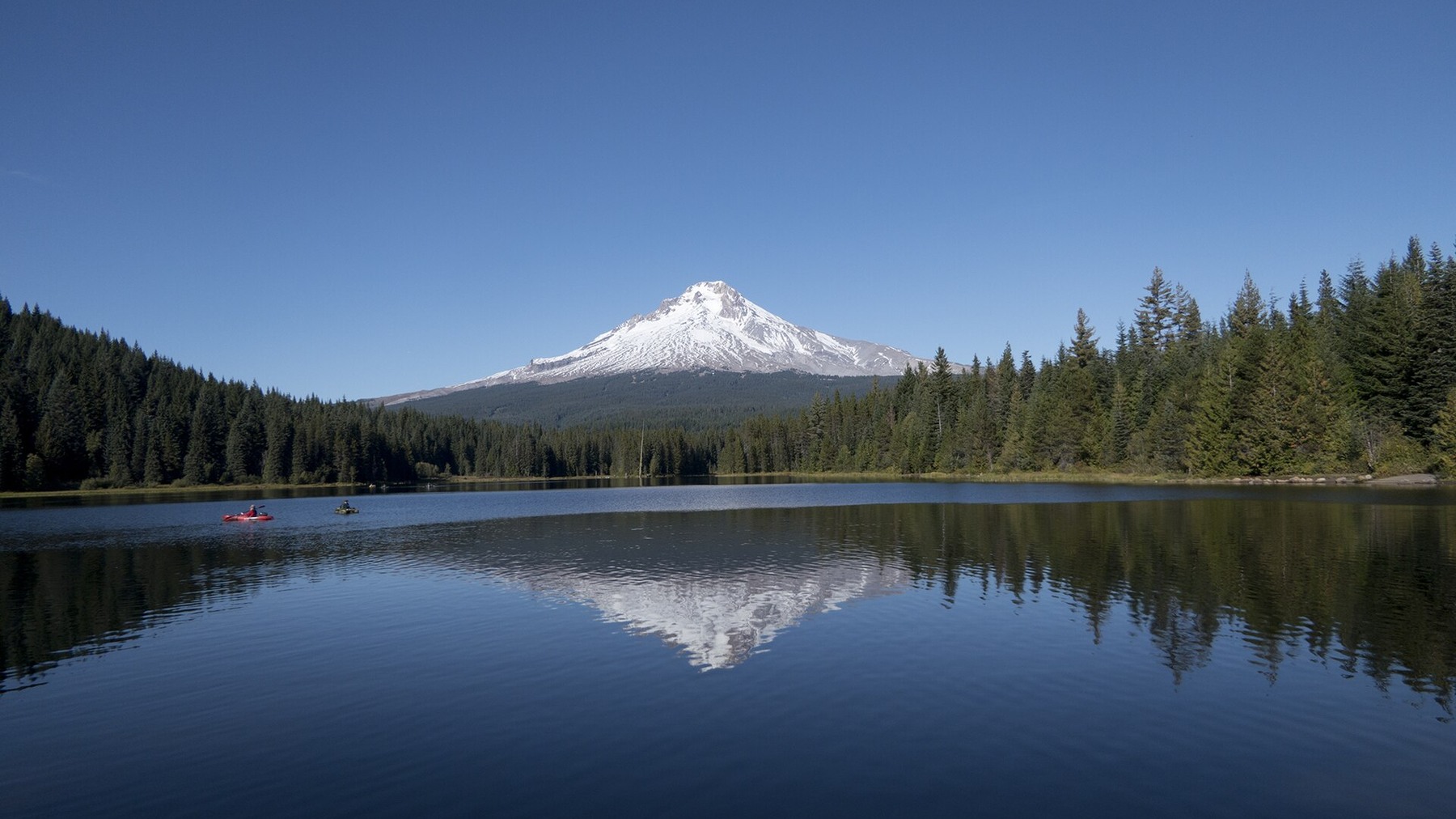
In summer, the Forest Service describes a two-mile loop with a barrier-free design, boardwalks, compacted-rock surfaces and benches. “Barrier-free” does not guarantee that every surface will be dry, clear or available on a particular day. Check the gate, maintenance notices, fire restrictions, and facility status before planning a visit that depends on step-free access.
Paddlers and a clear Mount Hood reflection show Trillium Lake’s summer character without repeating the winter scenes later in the guide. Photo: Bill Reynolds from Lake Oswego, Oregon · CC BY 2.0 · cropped and resized
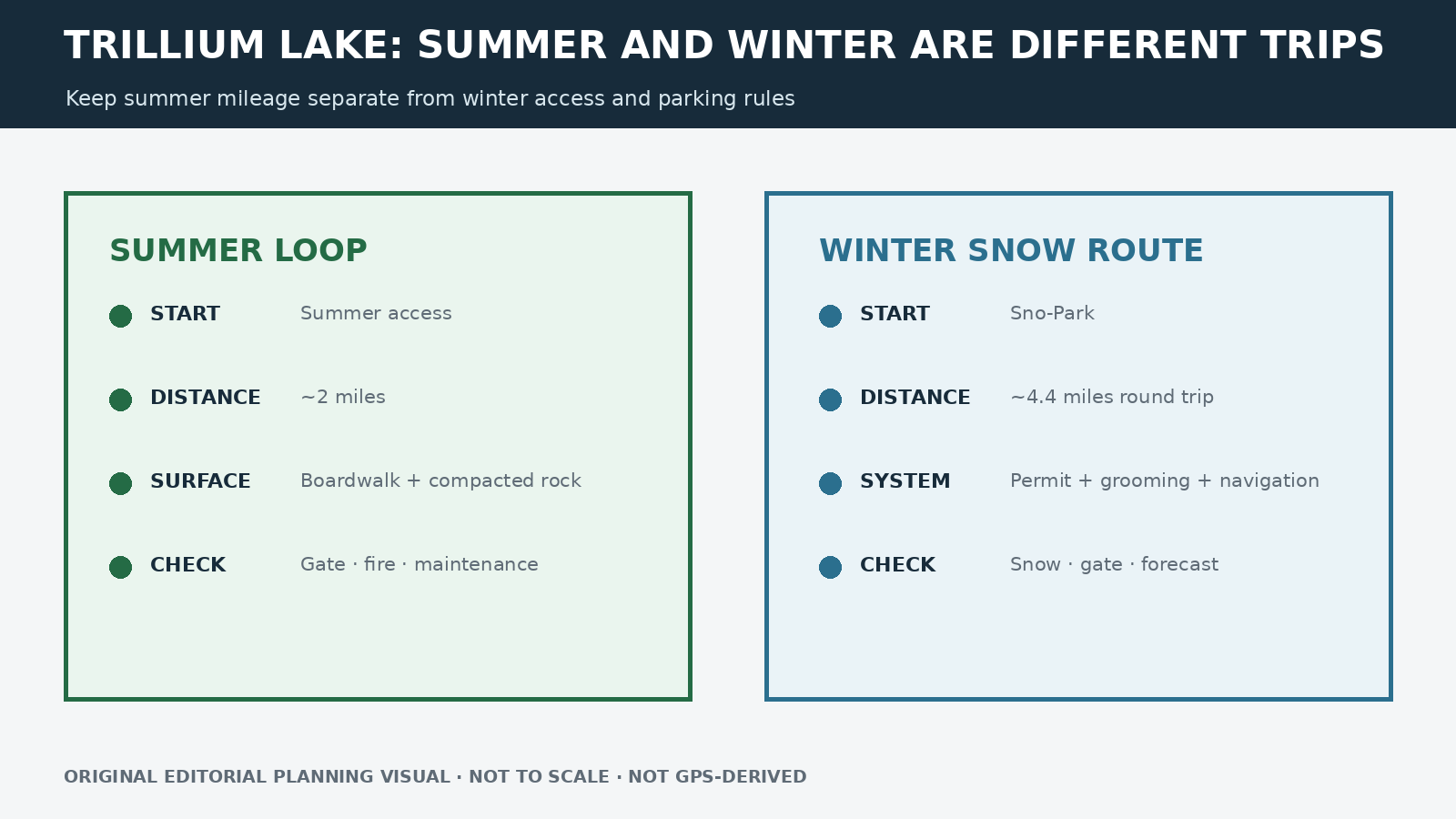
Original editorial planning graphic · not to scale · not GPS-derived
Winter: calculate the trip from the Sno-Park
When the vehicle gate is closed, the winter trip begins at the Sno-Park rather than at the summer lake access. The Forest Service describes a 3.6-mile loop in winter and roughly 4.4 miles round trip from the Sno-Park. Do not use the two-mile summer-loop distance to plan a winter trip.
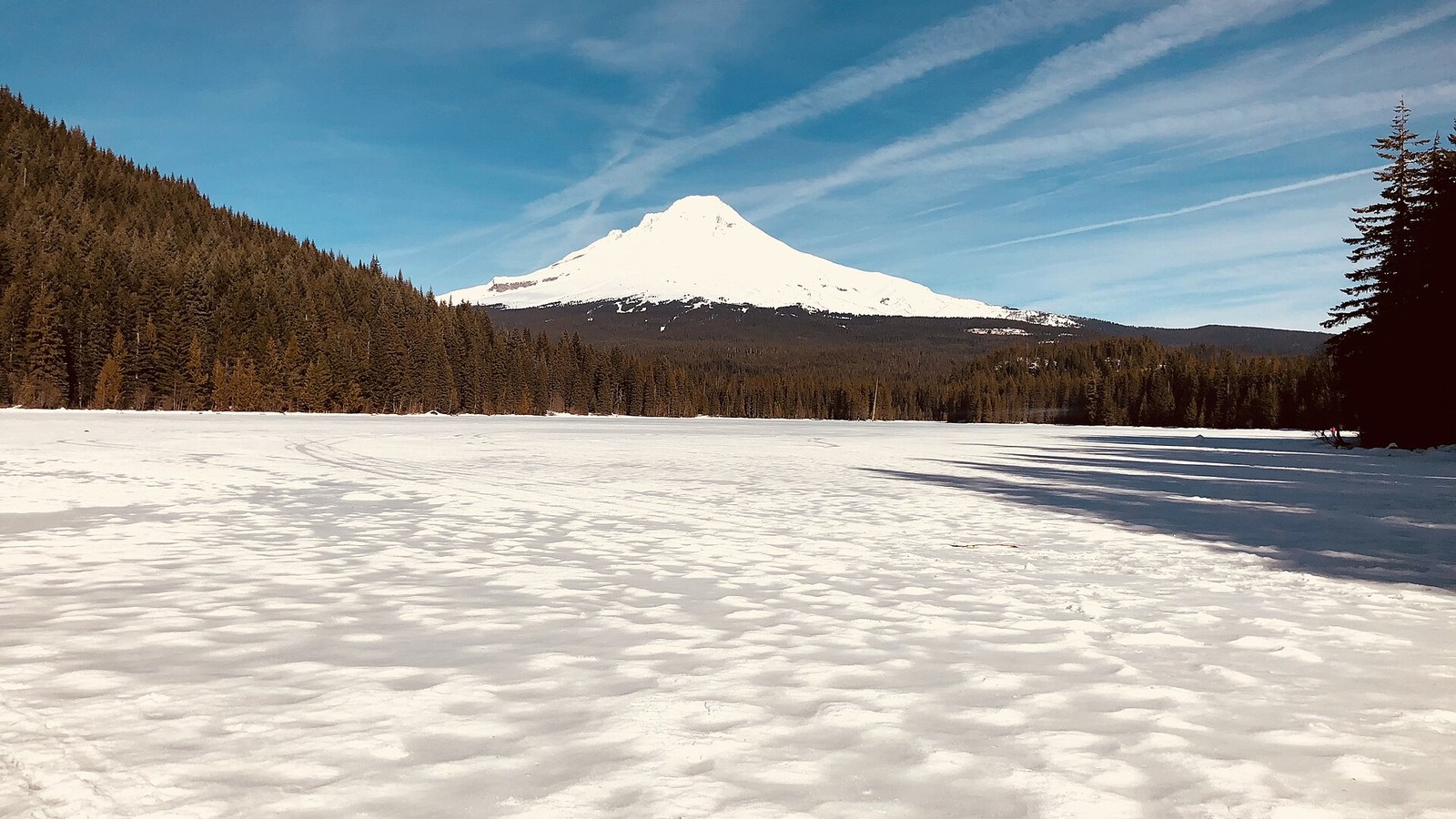
Winter changes the surface, access point and distance calculation. Photo: Diesputniks · CC BY-SA 4.0 · cropped and resized
Gate dates are a starting point, not a guarantee
Vehicle gates are scheduled to close from December 1 through April 1, but the Forest Service notes that they may close earlier or open later depending on weather. The calendar tells you when to start checking; it does not confirm access. Snow, ice, storm damage or road work can change how far visitors must travel on foot.
Parking permits, grooming and dog etiquette
An Oregon Sno-Park permit is required from November 1 through April 30. The Forest Service lists no formal winter trail fee but recommends a $3 grooming donation. Keep those details separate: one is a state parking permit and the other is a voluntary contribution.
Dogs must be leashed on ski trails. Keep paws and boots out of machine-groomed tracks when possible, yield predictably and pack out waste. In summer, check the current site rules instead of carrying winter guidance into the wrong season.
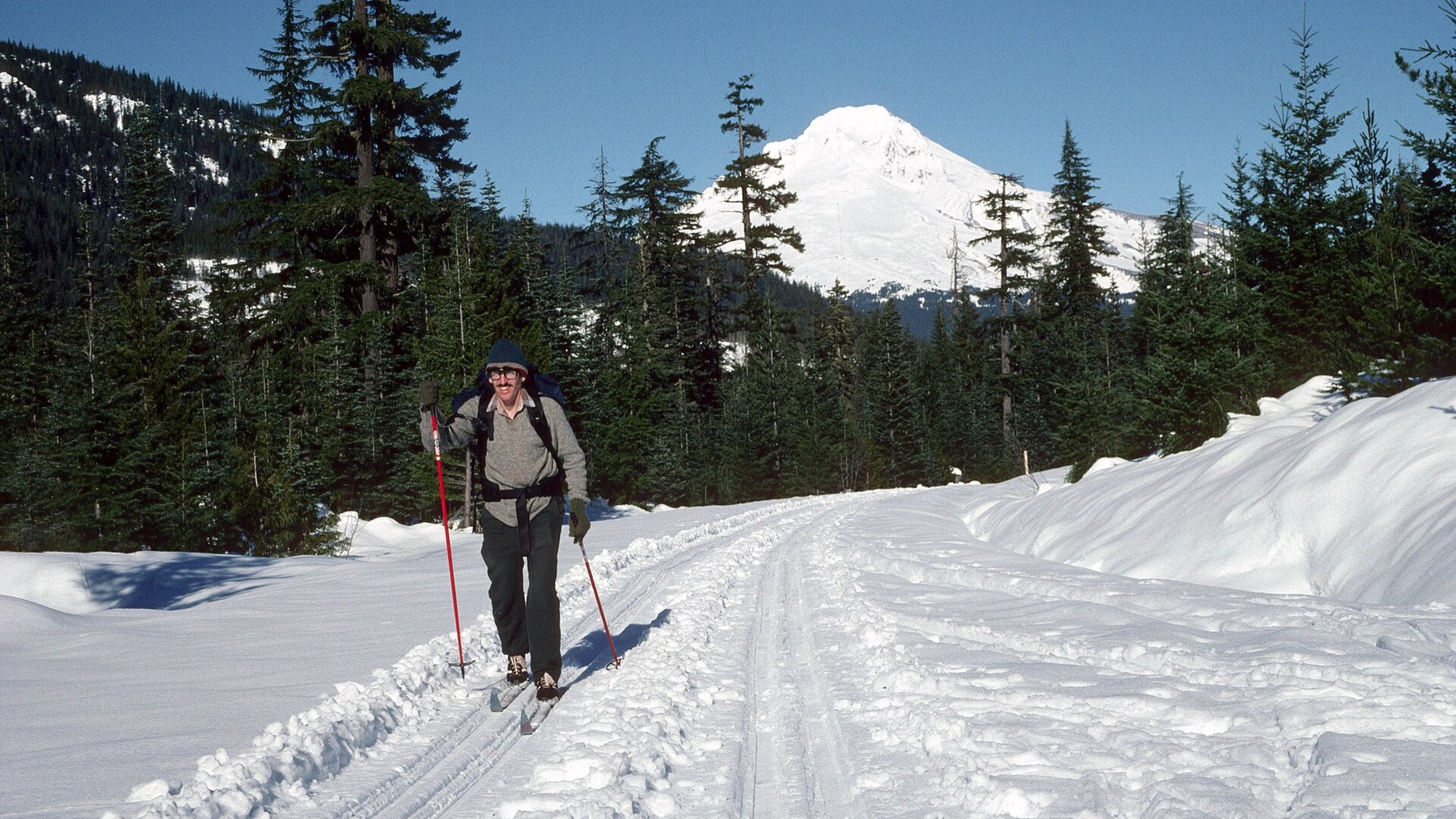
A cross-country skier on a bright winter day illustrates the groomed snow-corridor experience and its different access rules. Photo: U.S. Forest Service- Pacific Northwest Region · Public domain · cropped and resized
When Trillium Lake is the better Mount Hood choice
Trillium Lake works well for groups that want a lake setting with less climbing than Tom Dick and Harry Mountain. In winter, however, cold, snow navigation and the longer approach make the outing more involved than the summer mileage suggests. Mirror Lake is a separate forest-and-lake route with its own winter navigation concerns.
Summer accessibility and winter travel
In summer, confirm which sections of the boardwalk and compacted-rock loop are open, whether vehicles can reach the lake access and whether maintenance has changed the barrier-free route. The published design does not guarantee an obstruction-free experience for every visitor. Check current facility information when evaluating mobility, restroom and parking needs.
In winter, confirm the Sno-Park location, grooming status, current mileage and forecast. Carry navigation suitable for whiteout conditions or snow-covered signs, and stay out of machine-set ski tracks when walking. A leashed dog still needs cold-weather preparation and waste management. If snow cover is thin or thawing, follow current grooming and land-manager guidance.
Before departure, save the current gate notice and forecast, set a turnaround time and choose footwear for the actual surface. A calm lake photo does not show smoke, ice or snow depth.
Before you go
Confirm the gate position, the correct summer or winter mileage, Sno-Park dates, grooming donation, dog rules, fire restrictions and surface conditions.
Official Sources
Use the official pages below to check current closures, access, fees, and rules. The summer loop and winter snow route have different starting points and distances; confirm which route applies to your trip.
Access details last checked August 24, 2026. Before traveling, recheck Forest Service alerts, gate status, Sno-Park permit requirements, and trail conditions.
Photo and graphic credits
Trillium Lake Oregon (37520351656).jpg — Bill Reynolds from Lake Oswego, Oregon, CC BY 2.0. · Trillium Lake in winter.jpg — Diesputniks, CC BY-SA 4.0. · Cross country skiing Trillium Lake, Mt Hood National Forest-2 (37003596476).jpg — U.S. Forest Service- Pacific Northwest Region, Public domain.
Functional visual: original editorial graphic created for this article; not a trail map, GPS track or measured elevation profile.